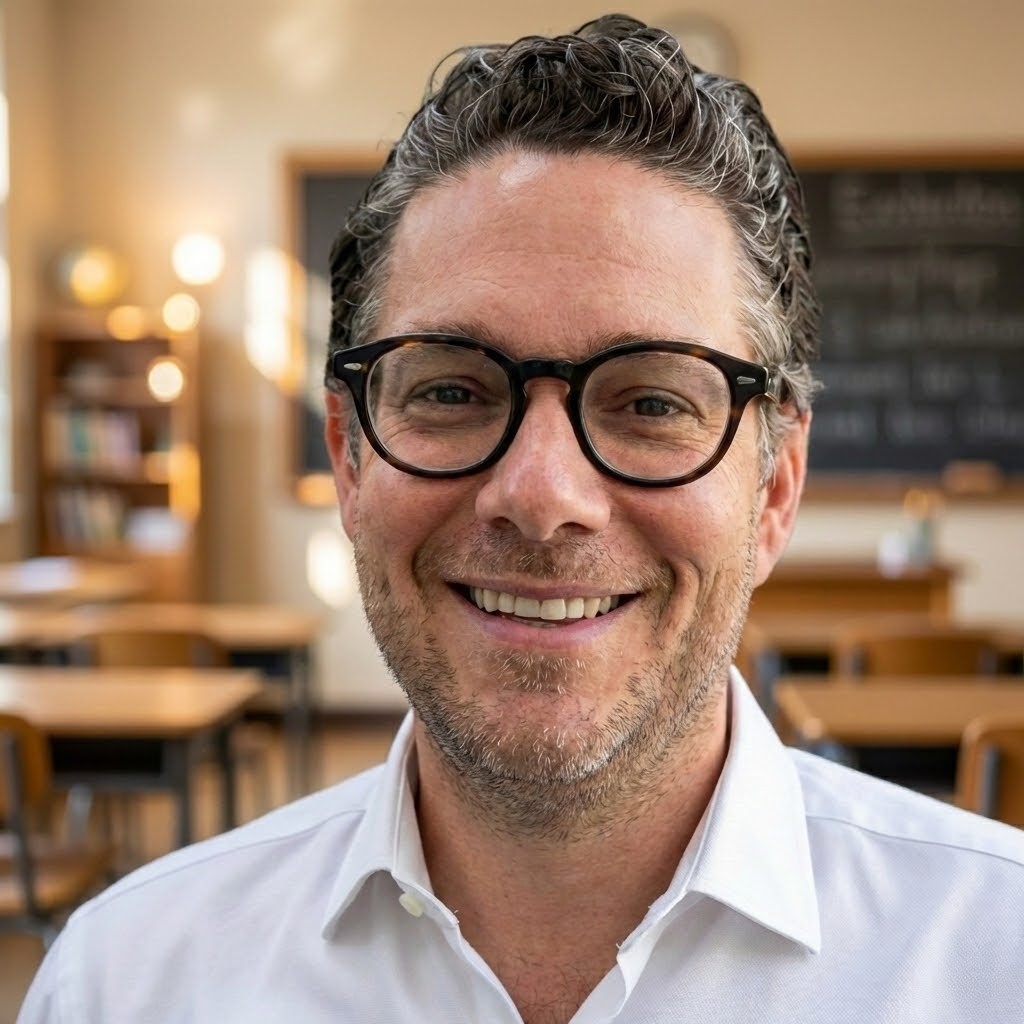
I help Canadian educators — especially in Quebec — understand AI clearly, integrate it responsibly, and teach it in ways that genuinely serve their students. No hype. No alarm. Just honest, practical guidance from someone who has been in classrooms and done my homework on AI.
The reality in Canadian schools right now
About Dave
I've spent more than 20 years in Canadian classrooms, teaching kindergarten, all the way up through high school, CEGEP and university, across multiple subjects. I know what it actually feels like to stand in front of students and figure out what good teaching looks like in a world that keeps changing.
AI is the biggest shift I've seen in education in my career. Isn't it the biggest shift you've seen too? And I believe genuinely, not as a pitch, that helping educators engage with it thoughtfully is one of the most important things I can do right now.
Having said that, I'm not here to sell you on AI as a magic solution. I'm here to help you understand what it actually does and doesn't do. And I'll help you figure out what's worth paying attention to, and what your students need from you in all of this. The goal isn't more AI in your classroom. The goal is better learning.
I'm certified to teach K–12 in Quebec and Ontario, and I have deep, hands-on experience with current AI tools in an educational context. All of it grounded in the Quebec and Canadian policy landscape, not filtered through American or international context.
Why This Matters Now
I want to be honest with you: the anxiety educators are feeling about AI is completely understandable. The cheating questions are real. The policy gaps are real. The uncertainty about what any of this means for learning — and for your job — is real.
"The question isn't whether your students will use AI. They already are. The question is whether they're using it in ways that actually help them learn — or ways that quietly get in the way."
There's a lot of noise out there. Tech companies promising transformation. Headlines swinging between utopia and catastrophe. What most educators actually need is something much simpler: a clear-eyed, honest conversation about what AI means for their school, their students, and their practice — with someone who respects their professional expertise and isn't trying to sell them anything.
That's what I do.
Focus Areas
Every school is at a different place with AI — and that's fine. These are the areas I come back to most, because they're where educators have the most pressing questions and the most room to make a real difference for students.
Reframing the conversation from "how do we catch cheaters" to "how do we assess learning authentically in an AI world." These are genuinely different questions — and the second one has better answers.
Between 80 and 96% of teachers have had zero formal AI training. That's the gap I help close — with PD that respects your time, meets you where you are, and gives you something you can actually use on Monday.
AI literacy belongs across all subjects, starting early — not just in computer class. I help schools think through where and how to integrate it in ways that are developmentally appropriate and genuinely meaningful.
AI as a tool that helps teachers differentiate, scaffold, and support students more effectively — not replace them. The research here is more nuanced than the headlines suggest, and that's exactly where we should start.
Students using AI may be getting better grades but retaining less. How do we teach them to use it in ways that build real understanding, not just faster outputs? This is one of the most important questions in education right now.
The bigger picture: how do schools preserve what makes education human while thoughtfully integrating AI? This is the conversation every leadership team needs to be having — and most aren't yet.
Services
I work with schools, boards, and individual teachers in three main ways. If you're not sure which fits, book a call — we'll figure it out together.
Half-day, full-day, and multi-session workshops for teaching staff — grounded in your school's specific context, not generic content recycled from American PD packages.
Working directly with school leadership and decision-makers to develop clear, practical AI strategies — grounded in your values, your community, and the Quebec or Canadian context you actually operate in.
Talks that cut through the noise and give educators something real to hold onto — whether that's a staff conference, a parent information evening, or a sector-wide event.
Who This Is For
There's a lot of AI-in-education content out there. Most of it is American, most of it assumes a single national policy context, and most of it doesn't account for the reality of how education actually works in Quebec — or anywhere in Canada, for that matter.
I'm not translating content from somewhere else. I'm working from the inside of this system, with an understanding of the distinct language and cultural context of Quebec education, the province-by-province jurisdiction over curriculum and policy, and the particular anxieties and strengths of Canadian teachers.
If you're looking for someone who genuinely understands your context — not just the generic version of your profession — that's what I offer.
No unified national AI strategy. Province-by-province jurisdiction. Quebec's distinct language, culture, and cautious policy posture. Both English and French school sectors. These aren't footnotes — they're the whole context. And they shape everything about how AI integration should be approached here.
You want to do right by your students in an AI world — and you haven't had the training to feel confident about it yet. That's not your fault. Let's fix it.
You're fielding questions from teachers, parents, and boards — and you need a clear position and a practical plan, not more uncertainty.
You're setting policy and direction for hundreds of teachers and thousands of students. Getting this right matters. Let's think it through together.
You're worried about what AI means for your kids' education and development. Those concerns deserve honest answers, not reassuring spin.
Let's Talk
Book a free 30-minute conversation. No sales pitch — just an honest discussion about where your school is at, what you're trying to figure out, and whether I'm the right person to help. If I'm not, I'll tell you that too.